Artificial Intelligence in Business: A Revolution in Efficiency and Innovation
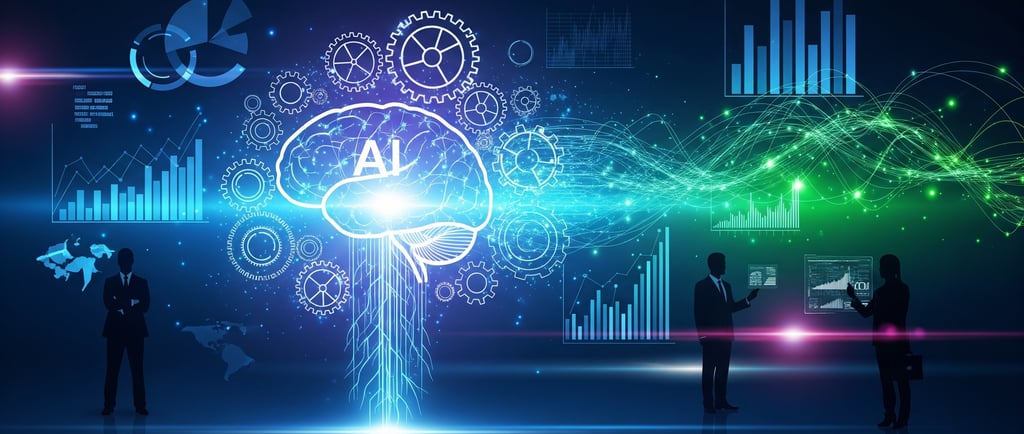
In the rapidly evolving landscape of the 21st century, artificial intelligence (AI) is no longer merely a futuristic concept from science fiction but a powerful and transformative force reshaping the business world. From automating routine tasks to providing insightful data analysis and driving innovation, AI has become a fundamental engine of efficiency, competitiveness and growth across almost every industry.
Its ability to process vast amounts of data, learn from it and make intelligent decisions is changing the way companies operate, interact with customers and create value.
At its core, AI in business refers to the use of intelligent machines and algorithms to perform tasks that traditionally require human intelligence. This includes machine learning (ML), which allows systems to learn from data without explicit programming; natural language processing (NLP), enabling computers to understand and generate human language; computer vision, which allows machines to interpret visual information; and robotics, which integrates AI into physical machines.
Applications of AI in Business
The applications of AI in business are virtually limitless and continue to expand every day.
Operational Optimisation and Automation
One of the most immediate and visible impacts of AI is the automation of repetitive and time-consuming tasks. In manufacturing, AI-powered robots and automated systems increase efficiency, reduce errors and accelerate production lines.
In administrative environments, robotic process automation (RPA) uses AI to automate tasks such as data entry, invoice processing and inventory management. This frees human resources to focus on more complex and strategic activities.
The result is a significant reduction in operational costs and a substantial increase in productivity.
Improved Decision-Making and Data Analysis
AI is unmatched in its ability to analyse large and complex datasets, uncovering hidden patterns, trends and correlations that might otherwise go unnoticed through traditional analysis.
With AI, companies can forecast demand, optimise pricing strategies, identify market opportunities and make well-informed strategic decisions. For example, in the financial sector, AI algorithms are widely used for fraud detection, market analysis and portfolio management.
Personalised Customer Experiences
AI is transforming how companies interact with their customers. Chatbots and virtual assistants, powered by natural language processing, provide 24/7 support, answer frequently asked questions and guide customers through services or purchases.
AI-based recommendation systems, similar to those used by Netflix and Amazon, analyse user behaviour to suggest personalised products or content. This significantly increases engagement and customer loyalty.
Marketing campaigns are also becoming increasingly personalised, with AI helping businesses segment audiences and deliver targeted messages that resonate more effectively with individual users.
Product and Service Development
AI plays a critical role in innovation and product development. In healthcare, AI accelerates drug discovery and improves disease diagnosis. In the automotive industry, AI forms the foundation of autonomous vehicle development.
Businesses also use AI to simulate scenarios, test prototypes and optimise designs, significantly reducing development cycles and improving the quality of final products.
Risk Management and Security
With the growing complexity of cyber threats, AI has become an essential tool for cybersecurity and risk management. AI algorithms can detect anomalies in network traffic, identify potential security breaches and respond to attacks in real time.
This helps organisations protect sensitive data, intellectual property and critical digital infrastructure.
Challenges of AI Implementation
Despite its enormous potential, implementing AI in business is not without challenges. One of the main obstacles is the need for high-quality data, as AI systems are only as effective as the data used to train them.
Other challenges include the shortage of skilled professionals with AI expertise, ethical concerns regarding data privacy and algorithmic bias, and the substantial initial investments required for technology and infrastructure.
The Future of AI in Business
The future of business powered by AI is both promising and inevitable. Companies that actively invest in artificial intelligence and integrate its capabilities into their core operations will be the ones that thrive in the digital era.
AI is not merely a tool — it is a catalyst for transformation, redefining standards of efficiency, innovation and competitiveness. It is guiding businesses towards a new era of intelligence, automation and connectivity.
Contacts
Telephone: +44 793 888 0596
Email: sales@digital-evolution.net