Website Development
Website Development Enquiries
We are here to bring your ideas to life!
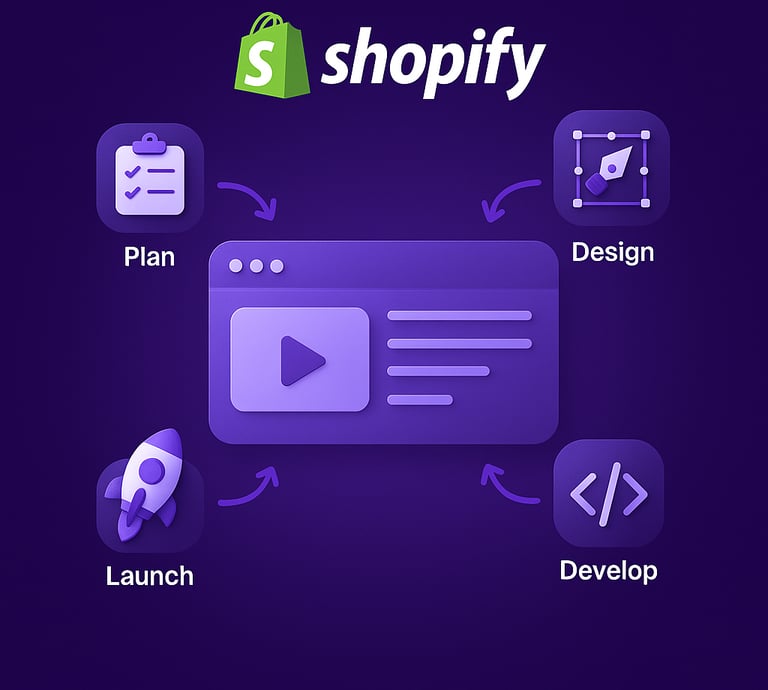

Shopify - Online Store
🟢 Advantages of Shopify
Ease of use – the platform is highly intuitive, even for users with no technical experience.
Hosting included – there is no need to purchase separate hosting; Shopify manages everything for you.
Security and reliability – automatic updates, SSL certificates and strong data protection.
24/7 support – access to professional assistance via chat, email or phone.
Integrations and apps – a large App Store with tools for marketing, payments, logistics and more.
Excellent mobile optimisation – all themes are responsive and look great on mobile devices.
Fast payments – integrated payment solutions such as Shopify Payments, PayPal, Stripe and others.
🔴 Disadvantages of Shopify
Monthly subscription fee – there are ongoing costs even if the website is not generating sales.
Transaction fees – additional charges may apply if Shopify Payments is not used.
Limited customisation – templates and structural flexibility are more restricted compared to WordPress or OpenCart.
Less flexible SEO optimisation – fewer options compared to platforms with full code access.
Platform dependency – the website cannot simply be moved to another hosting provider.
Higher costs when scaling – as the business grows, apps and integrations can increase overall expenses.
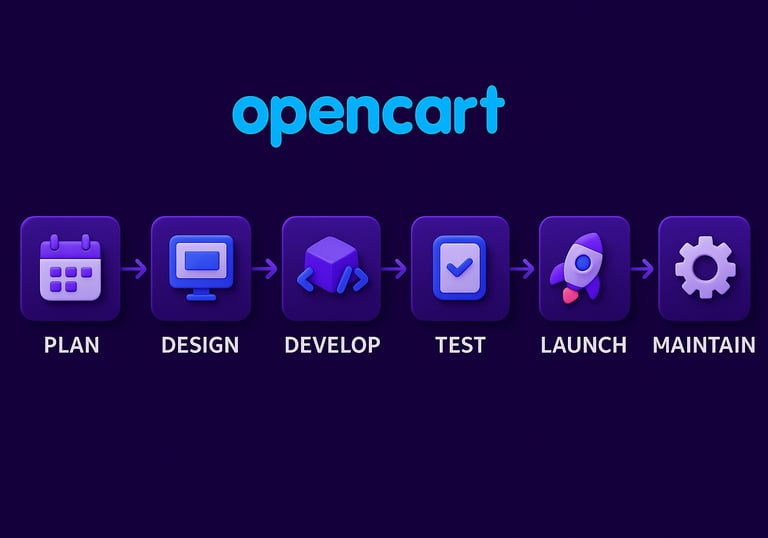
Opencart
🟢 Advantages of OpenCart
Free open-source platform – no monthly subscription fees.
Full control over the website – complete access to code, files and databases allows full customisation.
Flexibility – suitable for both small online shops and larger e-commerce businesses.
Thousands of extensions and themes – additional functionality, payment methods, integrations and designs can be easily added.
Strong SEO structure – the platform supports optimisation of URLs, meta data and page structure.
No platform restrictions – the website can be hosted anywhere and transferred freely.
One-time costs – expenses are usually related to development and maintenance rather than subscriptions.
🔴 Disadvantages of OpenCart
More technical platform – requires basic knowledge of hosting, FTP and system configuration.
Limited official support – there is no central support team like Shopify; assistance usually depends on developers.
Compatibility issues with updates – new versions may not always work smoothly with older modules or themes.
Security management required – regular updates and protection measures are necessary to prevent vulnerabilities.
More complex installation of features – some modules require manual installation and configuration.
Longer setup time – launching a store may take longer compared to ready-made SaaS platforms.
WordPress
🟢 Advantages of WordPress
Free and open-source platform – WordPress can be used freely without subscription costs.
Flexibility and versatility – suitable for blogs, online shops, corporate websites, portfolios and more.
Thousands of plugins and themes – a large ecosystem for additional functionality and design.
Strong SEO capabilities – WordPress is search-engine friendly and supports SEO plugins such as Yoast SEO and RankMath.
Full control over the website – complete access to files, database and customisation options.
Integration with external services – compatible with tools such as Mailchimp, Google Ads, WooCommerce, Stripe, PayPal and many others.
Scalability – WordPress can easily grow from a small website into a large business platform.
🔴 Disadvantages of WordPress
Requires regular maintenance – updates for themes, plugins and the core system are necessary.
Higher risk of cyber attacks – as the most widely used CMS, it is a frequent target for hackers.
Dependence on plugins – many features rely on plugins, which can sometimes affect website speed.
Performance issues – too many plugins or poor hosting can slow down the site.
Technical knowledge required for advanced customisation – complex modifications often require experience with PHP, CSS and MySQL.
Compatibility issues after updates – updates may occasionally cause errors in themes or plugins.
Hosting not included – a separate web hosting service must be selected and paid for.
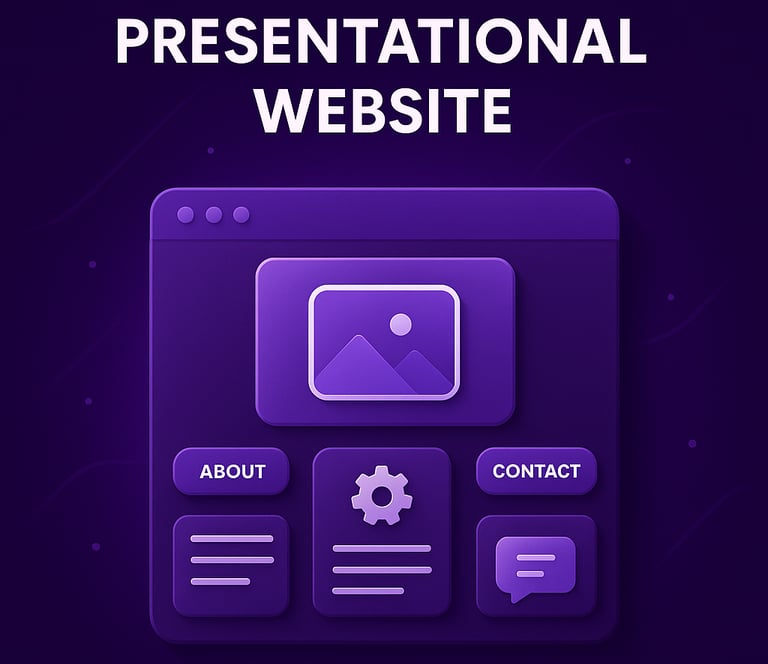
Presentation Websites
🟢 Advantages
Professional image – creates trust and a strong first impression for potential clients.
Clear presentation of the business – showcases services, team members, contact details and company mission in a structured way.
Low maintenance costs – usually consists of a single page or a few pages, reducing ongoing expenses.
Fast development – can often be built within just a few days.
Simple navigation – visitors can quickly find the information they need.
SEO potential – with proper optimisation, it can rank well in search engines.
Suitable for any business – ideal for small companies, freelancers, service providers and brands seeking an online presence.
Mobile optimisation – most designs are responsive and display well on phones and tablets.
Fast loading speeds – smaller amounts of content allow pages to load almost instantly.
🔴 Disadvantages
Limited functionality – not suitable for online shops, booking systems or complex platforms.
Less interactivity – fewer dynamic elements or personalisation features.
Limited content – typically focuses only on essential information..
Limited analytics capabilities – fewer advanced user behaviour tracking or CRM integrations.
May appear basic – without professional design, it can look overly simple.
Why a High-Quality Website Is So Important
In today’s digital world, a website is not merely a business card — it is a fundamental tool for building trust, expanding your customer base and strengthening your brand. Whether it is a small company, a personal project or a large corporation, having a high-quality website is essential for success.
First and foremost, a website creates the first impression of a company. In many cases, it is the first interaction between the customer and the brand. If a website looks outdated, is difficult to navigate or visually unappealing, visitors are likely to leave within seconds. On the other hand, a well-structured, modern and visually balanced website inspires professionalism and confidence.
Functionality is equally important. Fast loading speeds, intuitive navigation and responsive mobile design are essential features. Visitors should be able to find the information they need quickly and enjoy a smooth browsing experience. Otherwise, the risk of losing potential customers becomes extremely high.
Another crucial factor is search engine optimisation (SEO). Even the most visually impressive website has little value if it cannot be found online. High-quality website development includes proper site structure, optimised content and technical configurations that help the website rank higher in Google search results.
Finally, a well-designed website is a long-term investment. It can reduce advertising costs by generating traffic and building trust organically. A professionally built website not only sells products or services but also tells the story of the brand and creates an emotional connection with its audience.
In conclusion, a high-quality website is not a luxury — it is a necessity. It forms the foundation of every brand’s digital presence. In a world where competitors are only a click away, the quality of your website can be the deciding factor between success and being overlooked.
Contacts
Telephone: +44 793 888 0596
Email: sales@digital-evolution.net